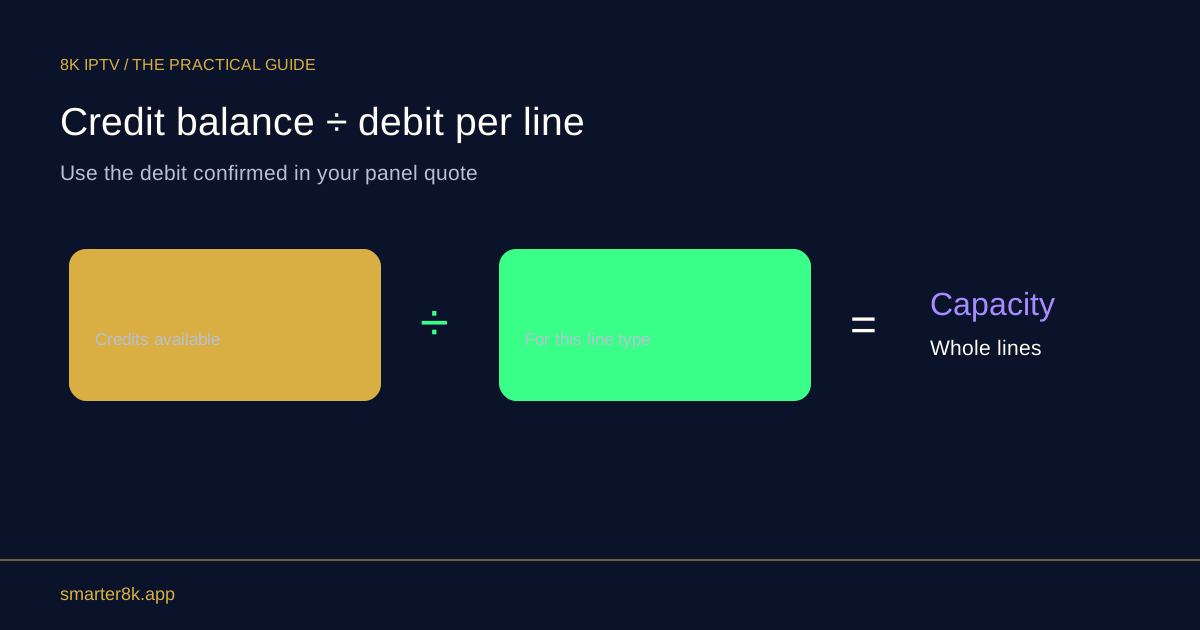
A credit balance represents units available for use under a supplier’s rules. Revenue records what customers pay for sales. Mixing the two obscures both stock usage and financial performance, especially when credits are purchased before accounts are sold.
Keep separate records
Track money received, money spent and credit movements in distinct fields. A customer payment does not automatically equal a particular number of credits until the relevant product and rule are applied. Likewise, a top-up changes available units without being a customer sale.
Use an explicit example
If a hypothetical reseller buys a balance today and sells an account next week, the purchase and sale belong to different events. Record the account’s credit consumption against that sale. Do not label the remaining panel balance as cash available for withdrawal unless the agreement actually provides that right.
Get suitable accounting help
Business reporting, tax treatment and record-retention obligations depend on the activity and jurisdiction. Use a qualified local adviser for those decisions. The operational ledger helps assemble the facts but does not determine legal or accounting treatment by itself.