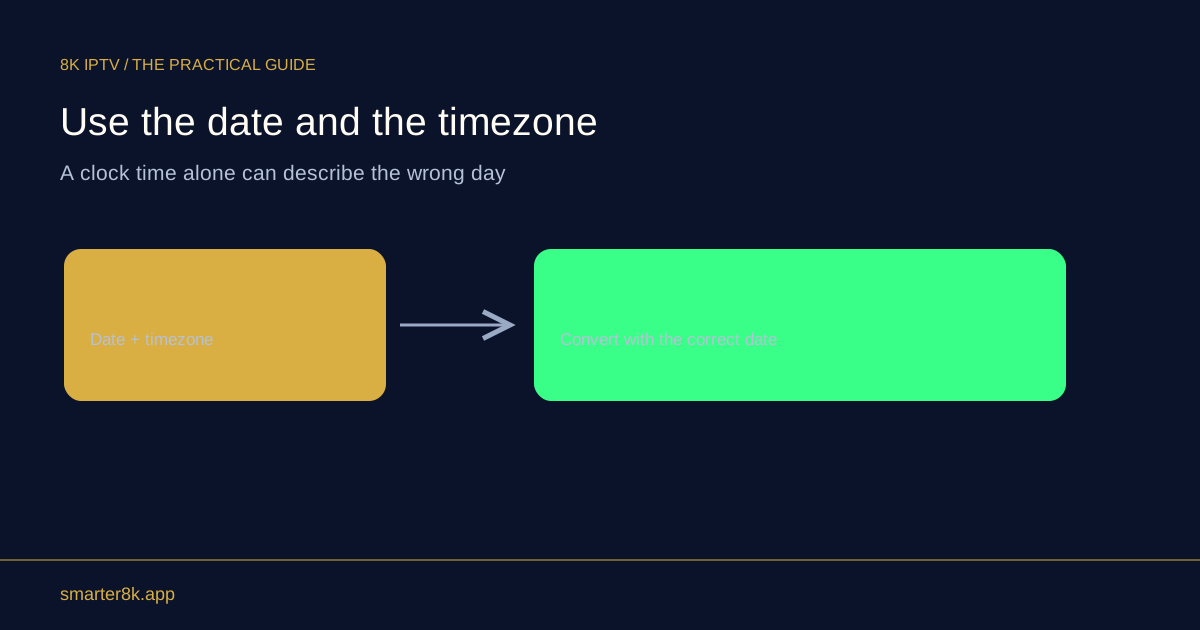
Keep the event’s date, named time zone and session together, then convert it for your location using a reliable calendar. A bare time is easy to misread, especially when the event falls after midnight or either location changes its clocks.
Preserve the original reference
Write down the organiser’s published time and location before making a conversion. Abbreviations can be ambiguous, and a schedule described only as “local time” needs the event location. For a tournament, record the particular match or session rather than copying the time from a different day.
Check the calendar date
An evening event abroad may fall on the following morning at home. Put the converted date into the calendar, not just the hour. If clocks change between scheduling and the event, review the conversion again. This is particularly useful for events announced many weeks ahead.
Share a clear invitation
When arranging a watch party, send the date and your local time zone in the same message. Include whether the invitation refers to arrival or the sporting start. People travelling during the event should check the calendar’s displayed zone so the reminder does not become confusing on the journey.