List who watches, which screens they use and when their viewing overlaps. A simple weekly picture of household use is more useful than choosing a plan from the total number of televisions alone.
Find the busy periods
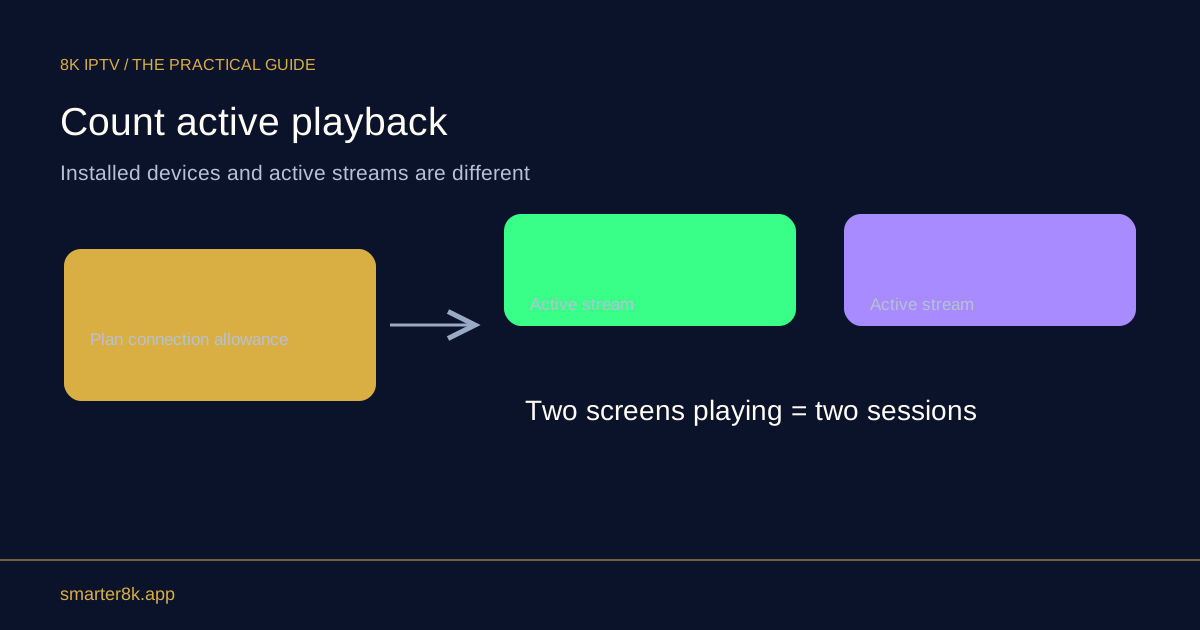
Think about a typical weekday evening and weekend. One person may watch a match while another prefers a series, with a third using a phone. Those overlaps determine simultaneous demand. A spare-room television used only by occasional guests may have little effect.
Include comfort and accessibility
Ask who needs larger subtitles, a simpler remote or a familiar favourites list. Test those needs on the actual screen during the trial. An arrangement that is technically playable but difficult for a regular viewer to operate will create repeated frustration.
Agree on account handling
Choose one person to keep the order reference, expiry information and support contact. Store credentials securely rather than in a shared public chat. If family members use separate devices, agree to stop playback when finished so an idle stream does not complicate another person’s session.