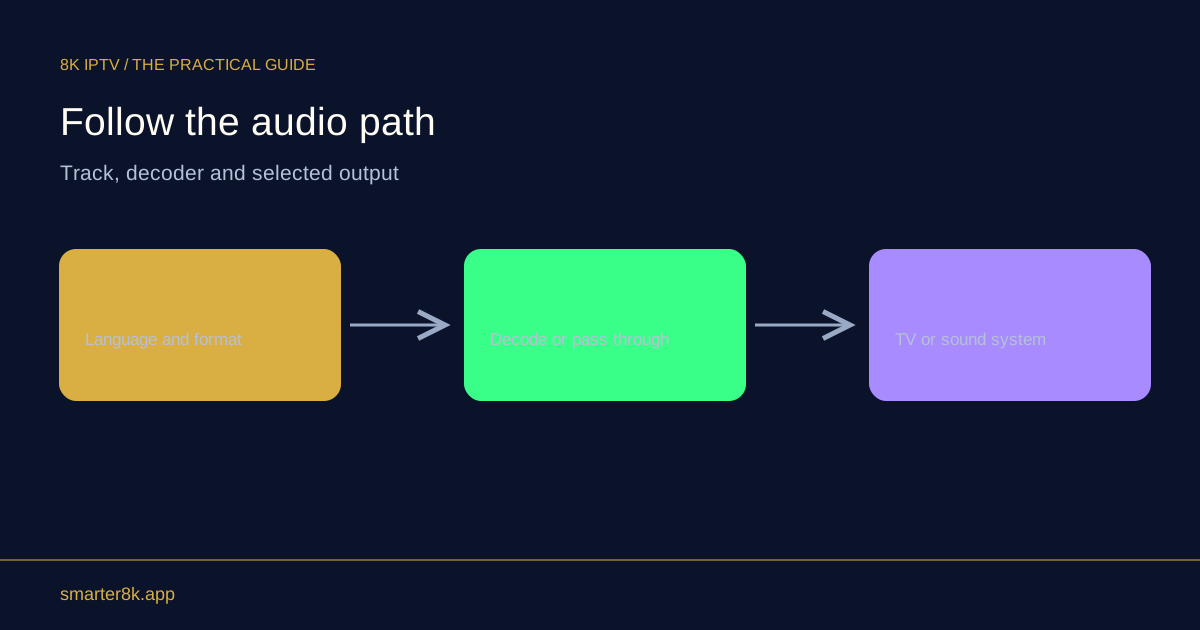
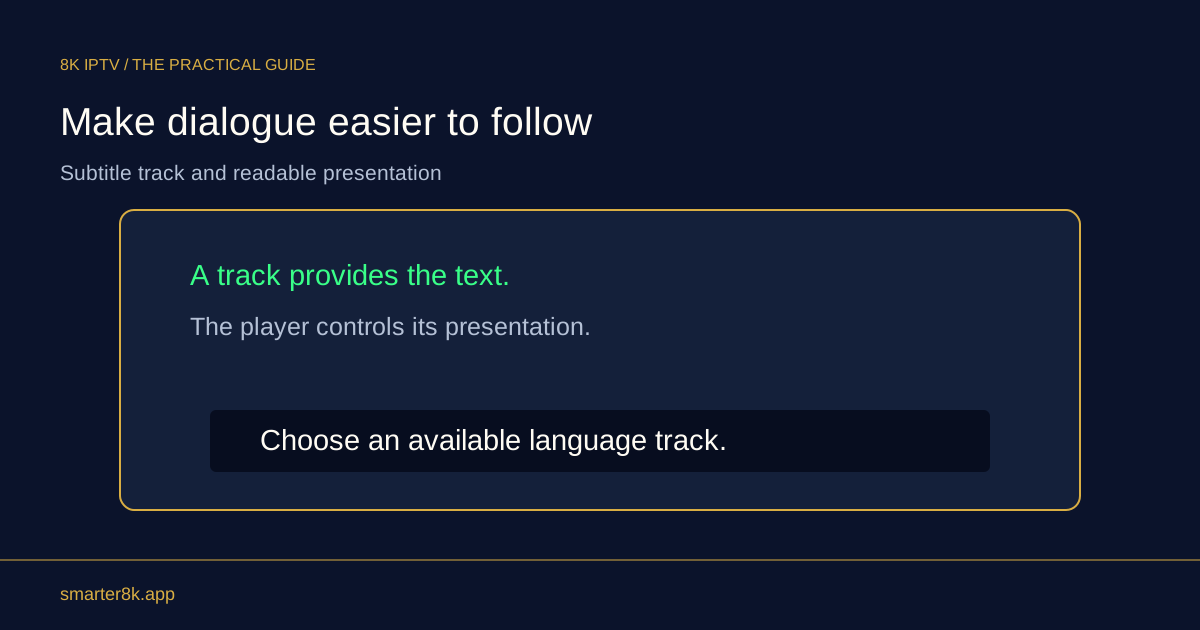
Choose the track that best supports understanding. Translated subtitles convey meaning in another language, while original-language captions can help follow speech and sound information. Translation style, reading speed and accessibility coverage differ, so one option is not automatically better for every viewer or programme.
Consider the viewing goal
A fluent viewer may want sound cues without translation, while a learner may use original-language text to follow unfamiliar speech. Another viewer may need a translation to understand the story at all. These are different needs, and the app should not treat a language preference as proof of a person’s accessibility requirements.
Expect editorial differences
Subtitles often condense speech to fit reading time and screen space. A translated line may therefore not correspond word for word with the audio, and a dubbed version can use different phrasing again. That does not automatically make the track wrong, though factual errors and missing meaning should still be reported.
Check availability title by title
The interface language does not establish which media languages are present. Inspect the actual track list and choose audio and text separately. If a translation is missing or clearly incorrect, provide a short example and playback time without copying large portions of a copyrighted programme into a public report.