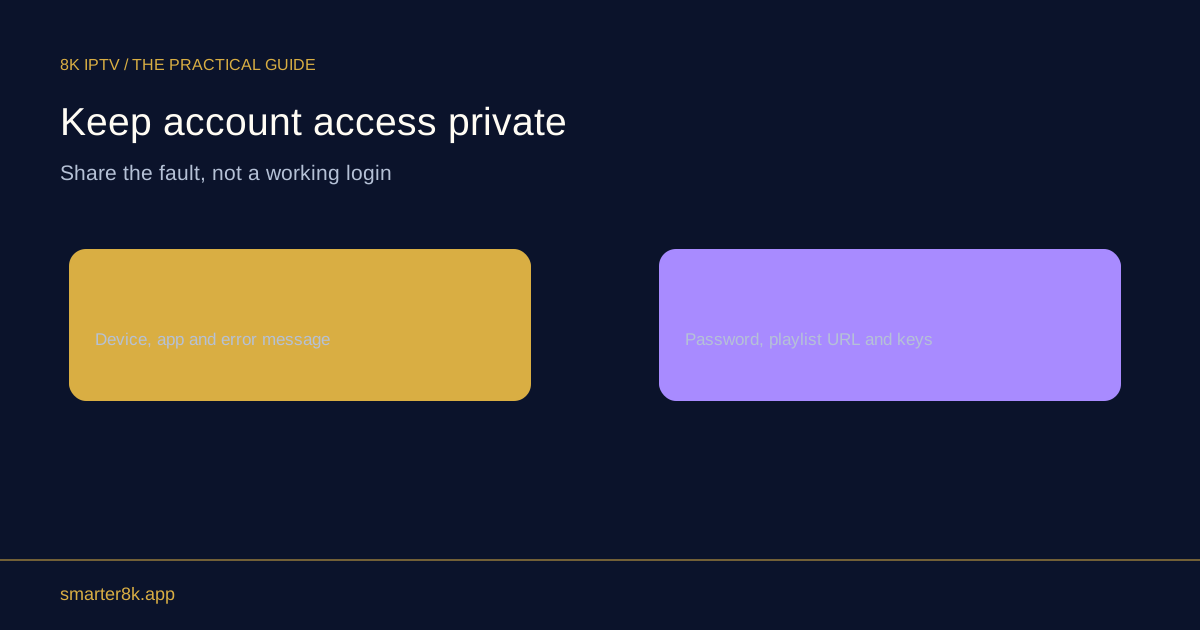
Include the visible error or relevant media information, such as codec, dimensions and frame rate, while excluding credentials, activation details and private playback URLs. Add a short written description of the symptom. A useful report identifies the problem without giving another person access to the account.
Inspect the whole screen first
Player information panels can place technical fields beside usernames, server addresses or device identifiers. Do not assume a screenshot is safe because its main purpose is to show a codec. Review every corner, notification and background window before sharing, especially when a television is mirroring a phone or computer.
Use the minimum necessary evidence
A cropped error message and a written device model may be enough. If redaction is needed, remove the sensitive content irreversibly in the shared copy rather than placing a transparent annotation over it. Keep the original privately only if useful, and avoid uploading account screens to public forums for routine troubleshooting.
Explain what the image cannot show
A screenshot cannot demonstrate growing lip-sync drift, repeated buffering or motion cadence by itself. Add the programme, approximate time, player version and a concise description of the sequence. Do not include a password to make the report more complete; support should have a separate legitimate process for identifying the account.